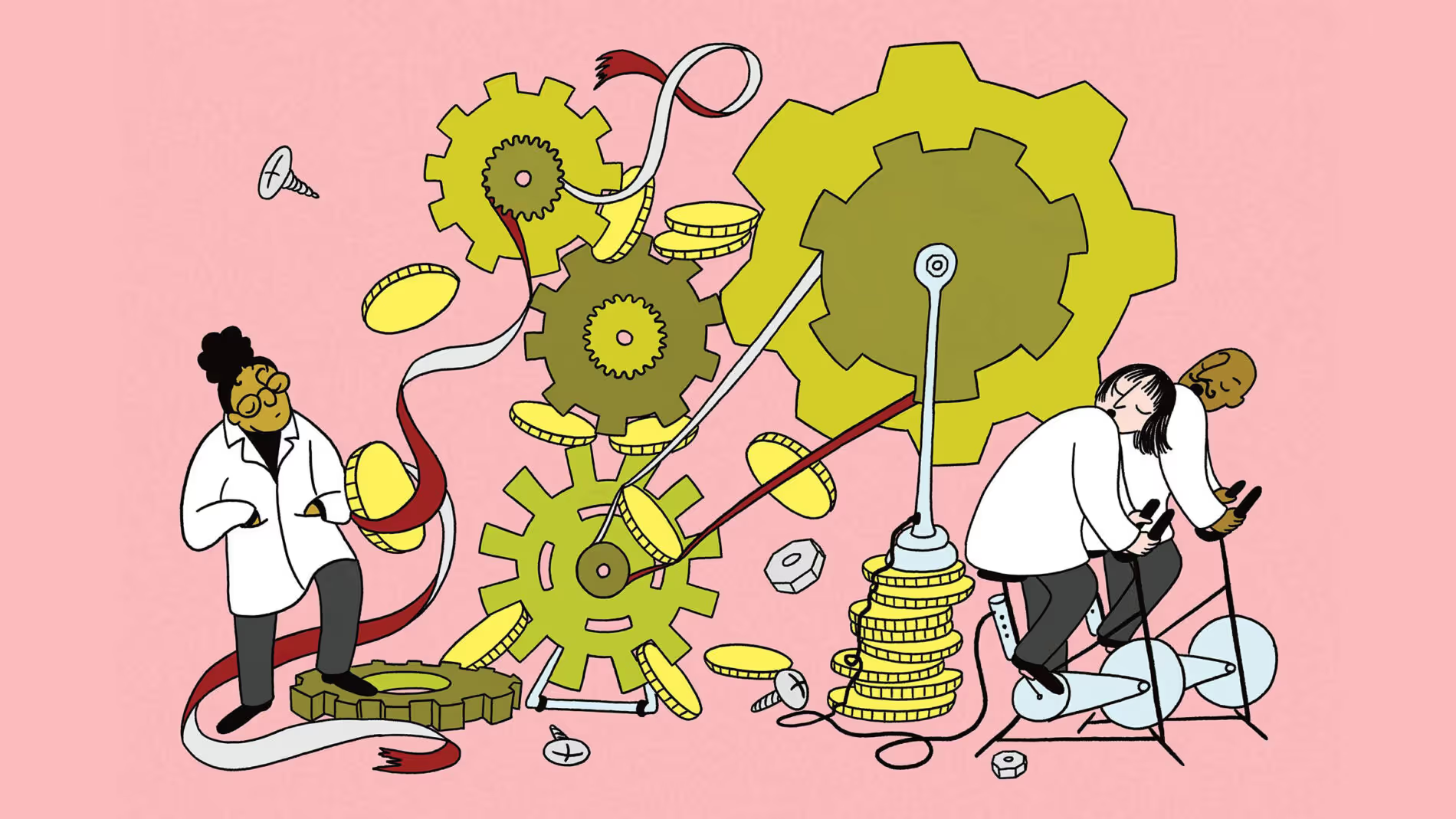
How Generative AI Is disrupting traditional creative processes ?
September 17, 2026Florina Babau
From spectacular graphics in a matter of seconds to chaos and budget overruns on the ground.
READ MORE
Legal Risks and Obligations Related to the Use of Artificial Intelligence Systems.
Read article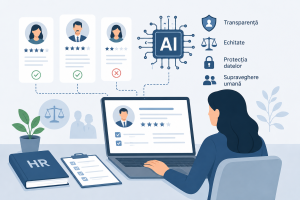
The use of artificial intelligence systems in recruitment and human resources management is no longer unregulated. Regulation (EU) 2024/1689 on artificial intelligence (“AI Act”) establishes clear rules in this regard, and compliance is essential for employers and HR professionals.
The regulation entered into force on August 1, 2024, and will be implemented in phases.
High-Risk AI Systems
According to Article 6 and Annex III of the regulation, software applications used for the following purposes are considered “high-risk” systems:
Strictly Prohibited Practices
Article 5 of the Regulation categorically prohibits certain practices that violate human dignity:
Key Obligations for Employers
If you use high-risk AI systems, the AI Act requires you to ensure:
Full transparency: Job applicants and employees must be aware that they are interacting with an AI system.
Human oversight: No major final decision may be left solely to the algorithm.
Anti-bias testing: Periodic verification of systems to prevent and reduce discrimination.
High-quality data: Use of accurate, relevant, and representative datasets.
AI literacy (Article 4): Companies are required to train and develop the skills of staff who operate these AI systems.
Applicable legislation in Romania
The AI Act is not a standalone piece of legislation but rather complements an existing national and European legal framework. The use of AI in HR must be aligned with:
GDPR (Regulation (EU) 2016/679) – In particular, Article 22, which prohibits decisions made solely through automated processing if they produce significant legal effects on the individual;
Labor Code – Law No. 53 of January 24, 2003;
Law No. 190/2018 (on measures for the implementation of the GDPR).
Risks and Penalties
Failure to comply with the AI Act may result in fines of up to 35 million euros or 7% of annual global revenue.
To mitigate legal and reputational risks, companies must:
Conclusion
The AI Act profoundly changes how companies can use artificial intelligence in human resources. The technology must remain a support tool, not an absolute decision-maker, and employers and HR professionals must give absolute priority to transparency, human oversight, and the protection of personal data.
In this new legislative landscape, implementing clear internal policies and carefully vetting the AI solutions used are essential steps for avoiding major legal, financial, and reputational risks.
From spectacular graphics in a matter of seconds to chaos and budget overruns on the ground.
READ MORE
Why does high engagement not guarantee team stability?
READ MORE
Discover what really motivates employees to innovate.
READ MORE