Tuesday, August 28th 2012, the Government Decision no. 16/2012 was published, modifying and completing Government Decision 92/2003 regarding the Fiscal Procedure Code.
Modifications will apply starting August 31st 2012, except dispositions regarding closing of debts (pct. 3), which will apply starting November 1st 2012.
Tuesday, August 28th 2012, the Government Decision no. 16/2012 was published, modifying and completing Government Decision 92/2003 regarding the Fiscal Procedure Code.
Modifications will apply starting August 31st 2012, except dispositions regarding closing of debts (pct. 3), which will apply starting November 1st 2012.
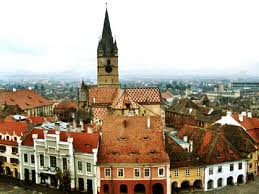
Ascent Group continues its expansion plans by opening a new office in Romania, in Sibiu.
Ascent Group’s office in Sibiu will offer clients all types of services the consulting group Ascent is offering, but also aims to become a catalyst for enhancing business relations between the central part of Romania and other countries in the region.
Not last, Sibiu office aims to provide support to all foreign investors intending to start a business in Transylvania.
The office in Sibiu is the 7th office opened by Ascent Group, after those in Bucharest, Arad, Chisinau, Limassol, Sofia and Belgrade.
The contact details where you can find our new office are:
Ascent Group Sibiu
Revolution street no. 1, apt. 15
Tel: +40 269 211090
fax: +40 269 211722
As a result to the public consultations, the Labour Inspection provides to the employers the new version of the IT application Revisal for establisment and completation of the evidence register of the employees in the electronic format, updated in accordance with the Government Decision no. 500/2011:
Revisal 5.0.6 (for Windows XP/ Vista/ 7)
Installation and use guide (Pdf format- Portable Document Format)
Recently, through the ANAF Order no. 3.253/2011 for the approval of issued application forms models OG no. 30/2011, were reglemented forms of delayed cancellation of penalties for companies which pay their debts until the end of the year.
Briefly, the fiscal facilities are granted for the fiscal obligations related fittings main residual fiscal obligations at 31 August 2011. Penalties of delaying are being cancelled or reduced as follows:
Based on the Romanian Government’s representatives, starting with October 1st, the minimum tax will be eliminated. The minimum tax was introduced at 1st of May 2009, together with other fiscal measures aimed to diminish the effects of the economic crisis, but finally, their effects were exactly the opposite.
As a result of the minimum tax’s elimination, the companies will pay between the 1st of October and the 31st of December 2010 the profit tax of 16%.
The last deadline for the minimum tax (the flat tax) will be the 25th of October, for the 3rd quarter of 2010. Starting with the 25th of February 2011, the companies will pay the profit tax for the 4th quarter of 2010, accordingly with the calculation norms existing before the introduction of the minimum tax.
One year and a half ago the Romanian Government announced the first set of anti-crisis measures. I’ve considered them wrong and I estimated their effects will be opposite and will deepen the crisis, respectively I wrote several articles about it at that time.
Connect with us and you will receive updated information about legal, fiscal and business environment news, but also information related to the events organised by us or our partners.
The European Union was born from a dream. Those who founded it were people with vision and high ideals, such as Robert Schumman, Kondrad Adenauer, Alcide de Gasperi or Jean Monnet. Their dream was continued by other visionaries: Edward Heath, Francois Mitterrand, Jacques Delors and Helmut Kohl.
The Europe they wanted was a Union of values, a strong area, united in diversity.
Is the Europe today the one they have dreamed to?
Last days news reveals us shocking information. Greece has publicly admitted that they provided false information to the European Union. Bulgaria succeeded in this series of disclosures, recognizing that they also provided false information to the Union regarding the actual level of its budgetary deficit. Certainly, in the coming weeks or months, other countries will be added to this list.
Trust between the Union states began to shake, and availability to offer support between the member states decreased substantially.
One of the latest concepts in business is the “corporate entrepreneurship”, i.e. implementing entrepreneurial business practices in the management of major corporations.
What does that mean? Shell we understand that the corporate management model, so much praised in the past 20 years is not really the key to success? Or that all the MBA’s and management, leadership, strategic planning courses, etc… involving managers of corporations do not hold the key to success and do not provide all the answers to the challenges these managers should face?
A year ago I was fortunate to know personally Larry Farrell, the American specialist who created the concept of Corporate Entrepreneurship and the No. 1 worldwide specialist in research and development of entrepreneurial practices.
“Arad, my love!” is an educational project which aims to reach the children from Arad on city’s values and beauty.
Because we think for long term, we joined Mişcarea Arădeana’s wish to determine future generations to think differently and to love Arad with the same passion as those who built the city. Therefore we want to offer children the chance to know Arad from another perspective, to provide them information about its values and spirit.
Another turbulent year is closing. After a devastating 2009 for the economies of all countries in the region what interests us most now, as investors, is what will happen in 2010 and what evolution will have the economy of these countries in the year we’re just about to enter.
The forecasts of the key financial and international institutions are not always in consensus and the estimations of the local governments are usually more optimistic than those of international institutions, mainly for elections PR reasons, so we will try to do a review as most complete as possible of these forecasts, including various points of view.
As average values, the contraction of the Eastern Europe economies in 2009 was estimated by BERD to 6.3%, respectively as by the estimations of the same international body, in 2010 we can expect an average increase of 2.5% of the Eastern European economies.
In January 2009 Ascent Group has signed a strategic partnership with the very known American expert in researching and promoting the principles of entrepreneurship and innovative business solutions – Larry Farrell. Due to this partnership, Ascent Group is going to represent Mr. Farell in Romania, Bulgaria, Serbia and Moldova for training and consultancy services on entrepreneurship topics.
The conclusion of this partnership was followed by some visits of Larry Farrell in the region, who launched the program personally in Romania between 10-18 April 2009 and în Bulgaria on October 6.
Bulgaria is trying to become more and more attractive for investors. One of the most recent changes in the Bulgarian legislation, voted on 02.10.2009 decreased the minimum start-up capital for the limited liability companies from BGN 5000 to BGN 2, a symbolic amount, representing the equivalent of 1 euro.
By applying this measure it’s considered that the level of entrepreneurship in Bulgaria will increase. The Bulgarian Government is aiming to stimulate young people’s wish and desire to become entrepreneurs, considering that “entrepreneurs who are capable of an idea to make a successful business are the lifeblood of any economy and a key factor in creating jobs, growth and competitiveness of the economy”.
The principle of “Think Small First” is recommended also by the European Commission to member states to adjust local legislation in order to minimize administrative barriers to small businesses and create favorable conditions for its emergence and development.
With the publication of economic data for the 2nd quarter of 2009 we find that all the countries of Eastern Europe were hit by the crisis, with deeper decreases in the economy than countries in Western, Southern or Northern Europe.
Economic data for Q2 2009 compared to Q2 2008 reflects a dramatic decrease in the economy of the Baltic countries (the largest reductions in Europe) positioning first Lithuania with a decrease in the economy of 22.6%, followed by Latvia with 18.2% and Estonia with 16.6%. Place 4 among the most affected economies is occupied by Romania with a decrease of 8.8% followed by Hungary with 7.4%, 5.3% in Slovakia, the Czech Republic with 4.9% and Bulgaria with 4.8%.
The decreasing trend of the economy is followed by another important country in Eastern Europe whether it is not a member of the European Union, namely Ukraine, reporting a decrease of 18% in Q2.
In today’s labor market, students are hardly dreaming of a career and graduates have already entered into the race for getting a job. But their success depends very much on the practical skills and knowledge they learned. And unfortunately Universities in Romania offers still too few opportunities for students to get in contact with what is happening in the concrete business.
When an investor decides to start a business in our region, he usually can choose between a few countries: if they want to choose a country from the European Union, then they will most likely choose between Romania and Bulgaria, the last countries who joined the EU and also the countries with the lowest labour cost among the EU countries. In case they want to choose a country that is not an EU member, then Serbia and the Republic of Moldova seam to be the 2 best options.
However it is pretty difficult to make a choice in the end, given that each of these countries have advantages and disadvantages. So I proposed to make an overview of the main elements that take into account when an investor decides to start a business in one of these countries.
First, I tried to group in a comparative table the main types of fees and taxes, and the costs that an investor must bear in each of the 4 analyzed countries. Please see them below:
Few months ago, the economic crisis was still, in the opinion of many, an excuse for companies to reduce costs, an “over-fed” issue by the press, a pretext for the Government not to increase the salaries in the budgetary sector, etc. Even among those who accepted the existence of a crisis, it dominated the view that it will be like a wave, which will last 5-6 months, will sweep some companies in the way, will sway some imbalances that were obvious to everybody, after which things will return “to normal” just as they were before.
Today no one doubts the reality and the depth of this crisis, that in fact affects all countries and all branches of economy at the same time, that it will be a lasting crisis and will take years for the things to return as they were in the summer of 2008. And in some fields maybe it will not ever return to those peaks.
Starting February this year, Jordan Sheppard launched new services in Romania. The new services are ”Outplacement” and an innovative service named ”Business Intelligence” from HR perspective.
The outplacement services aim at companies which are on their way to downsize part of their personnel and to part with specific members of their managerial team, as adaptation through low costs and efficiency at crisis time. The beneficiaries of this service are especially the downsized employees, who receive in this way professional consultancy for identifying new hiring opportunities and for positively overpassing this difficult period, in terms of social and psichological consequences.
2009 started in Romania in force, with plenty of news.
Besides the economic crisis is being felt more and more, creating a turbulent economic environment, we have a new Government, which from the first steps took many decision, contested and generating multiple changes. Last but not least, from the 1st of January 2009 many legislative changes shall became effective, some already approved in previous years, but which take effect only after that date, others very fresh.
I will therefore try to review the main changes brought by the beginning of 2009 which are affecting the business environment.
Starting January 2009 the new manager of Ascent Group’s office in Bucharest is Elena Manera. From this position Elena will coordinate the whole activity of one of the most important Ascent Group’s offices. Elena took over the management of the office from Luciana Căciuleanu, recently promoted Group Training Manager of Ascent Group.
Elena Manera joined Ascent Group’s team in August 2008 as coordinator of the projects department.
Starting December 2008 Luciana Căciuleanu became Group Training Manager of Ascent Group. From this position Luciana will coordinate the whole training activity of Ascent Group in Romania, Bulgaria, Republic of Moldova and Serbia.
Luciana joined Ascent Group’s team in 2006, holding during the time various positions within the organization, the most recent one being manager of Ascent Group’s office in Bucharest.
Luciana has an University degree in Economics and Public Administration within Ştefan cel Mare University in Suceava, her professional experience including 7 years of activity in various fields, especially company’s reorganization and restructuring processes, human resources, business consulting and training.
Already for many years now I handle negotiations with trade unions. Especially when related to renegotiations of collective labor agreements, but in many cases throughout the year. I had the opportunity to meet many representatives of trade unions and to negotiate with them. And I do not want to hide the fact that very often I felt frustration, because of the total unconstructive attitude of union’s representatives, because the total lack of understanding of economic realities by some of these, but mostly because of a completely wrong understanding of the role that they should play as a Union…
The employer “must” give us! The employer “must” understand us! The employer was mostly for the trade unions the “black man” who should be charged for all our failures, who must solve all our problems, whether he has or not the capacity to do so.
In November 2008 Ascent Group signed in Padova a strategic agreement with Eurointerim Spa. Based on this agreement Ascent Group will represent Eurointerim in Romania, Bulgaria, Serbia and the Republic of Moldova for the whole typology of services offered by Ascent Group. The same agreement stipulates that Ascent Group recognizes Eurointerim as its exclusive partner for personnel leasing services in all the countries in the region.
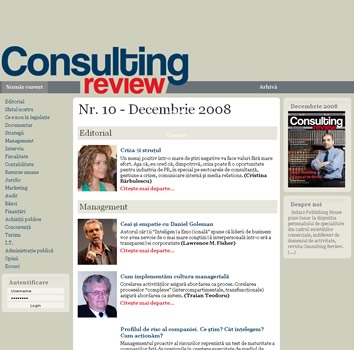
The magazine Consulting Review recently launched the new version of the website. Starting with November 2008 you can read most of the articles published in the magazine also on the website, at: www.consultingreview.ro.
Consulting Review was launched at the end of 2007 and in one year has managed to become a referral on the business publication’s market in Romania through the quality of the articles, analysis and opinions published by a wide number of specialists in the consulting fields that are covered by the magazine.
Starting with January 2009 the magazine will be distributed exclusively based on subscription. Details about the way you can subscribe can be found at http://www.consultingreview.ro/abonare.html. Ascent Group invites you to subscribe to Consulting Review in order to benefit in 2009 as well by the advices of the magazine’s consultants.
Folosim cookie-uri pe site-ul nostru web pentru a furniza vizitatorilor o experiență de navigare cât mai bună și servicii adaptate nevoilor și interesului fiecăruia. Dând clic pe „Accept”, sunteți de acord cu TOATE cookie-urile.
Acest site web folosește cookie-uri pentru a vă îmbunătăți experiența în timp ce navigați prin site. Dintre aceste cookie-uri, cookie-urile clasificate ca fiind necesare sunt stocate în browserul dvs., deoarece sunt esențiale pentru funcționarea funcționalităților de bază ale site-ului web. De asemenea, folosim cookie-uri terțe care ne ajută să analizăm și să înțelegem modul în care utilizați acest site web. Aceste cookie-uri vor fi stocate în browser-ul dvs. numai cu acordul dumneavoastră. De asemenea, aveți opțiunea de a renunța la aceste cookie-uri. Dar renunțarea la unele dintre aceste cookie-uri poate avea un efect asupra experienței dvs. de navigare.
Cookie-urile necesare sunt absolut esențiale pentru ca site-ul web să funcționeze corect. Această categorie include doar cookie-uri care asigură funcționalități de bază și caracteristici de securitate ale site-ului. Aceste cookie-uri nu stochează nicio informație personală.
Cookie-urile neesețiale nu se încadrează în definiția cookie-urilor esențiale deoarece nu sunt strict necesare pentru funcționarea unui site sau a serviciilor oferite pe acesta, precum cookie-urile utilizate pentru analizarea comportamentului pe un site web (cookie-uri „analitice”) sau cookie-urile utilizate pentru afișarea de reclame.